The Curious Case of the Vanishing Lighthouse Keeper
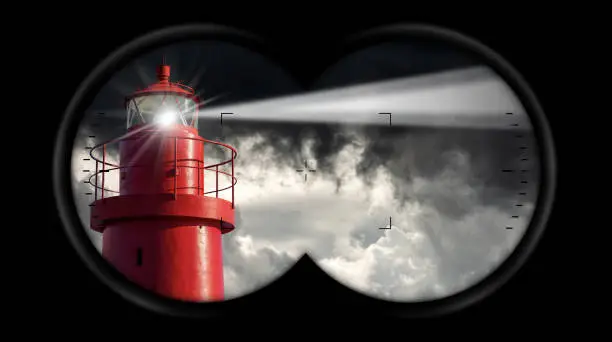
In the quiet coastal town of Port Blossom, a peculiar incident has sent whispers through the community. Elias Thorne, the solitary keeper of the ancient Blackwood Lighthouse, has vanished without a trace. His disappearance, noted only after his customary morning signal failed to appear, has baffled local authorities and sparked a flurry of speculation among the townsfolk. The lighthouse, a stoic sentinel against the relentless sea, now stands eerily silent, its powerful beam no longer piercing the night. Investigations have revealed no signs of struggle, no forced entry, and no note left behind. His personal effects, including his well-worn logbook, were found undisturbed, save for a single page torn out, its contents unknown. Fishermen who passed by the night of his disappearance reported an unusual, almost ethereal glow emanating from the lighthouse, a light distinct from its regular beacon, accompanied by a faint, melancholic melody carried on the wind. Some claim to have seen a fleeting shadow, impossibly tall and slender, against the backdrop of the swirling fog. The local constable, Inspector Davies, a man known for his pragmatic approach, admits to being at a loss. "It's as if he simply ceased to exist," Davies stated in a press conference, his brow furrowed with perplexity. The lighthouse, built in the late 18th century, has its own share of local legends, tales of spectral sailors and lost souls. Could Elias Thorne's disappearance be linked to these age-old myths, or is there a more mundane, yet equally sinister, explanation lurking beneath the surface of Port Blossom's calm facade? The community holds its breath, waiting for answers that seem to drift further away with each passing tide. The mystery deepens with every unanswered question, leaving a void not just in the lighthouse, but in the hearts of those who knew the quiet, dedicated keeper. The sea, which Elias loved and served, now seems to guard its secrets with an impenetrable silence, mirroring the enigma of his vanishing act. The only clue, if it can be called one, is the lingering scent of salt and something unidentifiable, like ozone mixed with ancient parchment, that hangs in the air around the lighthouse.
Further inquiries into Thorne's life revealed a man deeply devoted to his solitary existence, rarely venturing into town. His only regular visitor was a traveling merchant, Silas Croft, who delivered supplies once a month. Croft, when questioned, described Thorne as a man of few words but profound wisdom, often found poring over old nautical charts and forgotten tomes. Croft also mentioned a recurring dream Thorne had shared with him, a dream of a shimmering portal at the base of the lighthouse, leading to an unknown, star-filled expanse. This detail, dismissed as mere fancy by Inspector Davies, has fueled the more fantastical theories among the townsfolk. The coast guard has initiated a wide-scale search operation, deploying patrol boats and aerial drones, but the vast, unpredictable waters have yielded no trace of the missing man. The local newspaper, "The Port Blossom Chronicle," has dedicated its front page to the story for the third consecutive day, with headlines ranging from "Lighthouse Keeper Vanishes into Thin Air" to "Ancient Legends Stirred by Thorne's Disappearance." Children whisper tales of the lighthouse being haunted, its light now a mournful eye watching over the empty sea. The incident has cast a long shadow over the usually tranquil town, disrupting its rhythm and forcing its residents to confront the unknown. The lighthouse, once a symbol of guidance and safety, has become a monument to an unsettling enigma. The wind carries the scent of brine and mystery, and the waves crash against the shore, seemingly echoing the unanswered questions. The torn page from Thorne's logbook remains a tantalizing hint, a piece of a puzzle that may never be fully assembled. What secrets did it hold? What warning or revelation was so critical that it needed to be removed? The questions linger, as persistent as the sea fog that often envelops Blackwood Lighthouse.
The search efforts have been expanded to include neighboring islands and remote coves, but the rugged coastline offers countless hiding places, both natural and unnatural. Divers have explored the waters around the lighthouse, finding nothing but the usual marine life and ancient shipwrecks. The only unusual discovery was a small, intricately carved wooden box, found lodged in a crevice near the lighthouse's foundation. Inside, it contained a single, tarnished silver key and a dried, unidentifiable flower. These items have been sent to the regional forensic lab for analysis, though Inspector Davies is skeptical of their relevance. "Could be anything," he muttered, "an old trinket, a forgotten keepsake." Yet, the townsfolk, fueled by the mystery, see deeper meaning. They recall old wives' tales of hidden treasures and secret passages connected to the lighthouse. The flower, some say, resembles a rare bloom said to grow only in places touched by ancient magic. The key, they speculate, might unlock a secret chamber or a forgotten vault. The narrative of Elias Thorne's disappearance has become a tapestry woven with threads of fact, folklore, and fervent imagination. The lighthouse itself, a silent witness, seems to absorb and reflect the town's anxieties. Its stone walls, weathered by centuries of storms, seem to hum with unspoken stories. The very air around it feels charged with an unseen presence, a lingering echo of the man who once tended its light. The mystery of the vanishing lighthouse keeper has transcended a mere police investigation; it has become a local legend in the making, a chilling tale to be told around crackling fires on stormy nights, forever etched into the folklore of Port Blossom.
Related Topics:
- Coastal Mysteries
- Unexplained Disappearances
- Lighthouse Lore
- Maritime History
Archaeologists Unearth Ancient Device Emitting Strange Frequencies

In a remote valley nestled deep within the Carpathian Mountains, a team of archaeologists led by Dr. Evelyn Reed has unearthed an artifact that defies contemporary understanding. The object, a metallic sphere roughly the size of a human head, was discovered encased in a layer of petrified wood, dating back an estimated 10,000 years. What makes this discovery truly astonishing is the faint, rhythmic hum it emits, a frequency that has yet to be identified by any known scientific instrument. Dr. Reed, a seasoned veteran of countless digs, described the moment of discovery as "unsettlingly profound." The sphere, smooth and unblemished despite its age, bears no visible seams or markings, suggesting a level of craftsmanship far beyond what was thought possible for its era. Initial attempts to analyze its composition have been met with frustration; the material resists conventional testing methods, behaving unlike any known alloy. When brought to the surface, the hum intensified slightly, causing a subtle vibration in the ground and a peculiar tingling sensation in the hands of those nearby. Local villagers, who have long held superstitions about the valley, speak of ancient spirits and forgotten technologies buried beneath the earth. They claim the hum is the "song of the old ones," a melody that can influence dreams and alter perception. Scientists from around the globe have expressed intense interest, with several research teams already en route to the site. The implications of such a discovery are staggering, potentially rewriting chapters of human history and challenging our understanding of ancient civilizations. Could this be evidence of a highly advanced prehistoric culture, or something even more inexplicable?
The device, provisionally named the "Echo Sphere," has been transported to a secure, purpose-built laboratory for further study. Dr. Aris Thorne, a leading expert in archaeoacoustics, has been brought in to analyze the strange frequencies. His preliminary findings indicate that the hum is not a simple mechanical vibration but a complex, modulated signal, almost as if it's transmitting information. He noted that the frequency subtly shifts, sometimes mimicking patterns found in natural phenomena like seismic activity or atmospheric pressure changes, and at other times exhibiting sequences that resemble highly complex mathematical equations. Attempts to record the sound have been partially successful, but the full spectrum of its emission seems to elude capture. When exposed to certain energy fields, the sphere's hum becomes more pronounced, and faint, almost imperceptible light patterns flicker across its surface, resembling constellations or intricate circuitry. The team is proceeding with extreme caution, aware that they are dealing with something potentially revolutionary, or perhaps even dangerous. The possibility of the device being an ancient power source, a communication tool, or even a form of early artificial intelligence is being debated among the scientific community. The discovery has ignited a passionate discussion about the "lost technologies" often hinted at in ancient myths and legends. Could this be the first tangible proof that such advanced knowledge existed in the distant past? The Echo Sphere remains an enigma, a silent testament to a forgotten era, challenging the very foundations of our historical narrative and promising to unlock secrets that could reshape our future.
Further analysis of the Echo Sphere has revealed that its surface, though appearing seamless, is composed of microscopic, interlocking hexagonal plates. These plates are so perfectly aligned that they create the illusion of a single, continuous surface. Dr. Reed's team has also detected minute fluctuations in the local magnetic field around the sphere, suggesting an internal mechanism that interacts with its environment in a way previously unknown to science. The most astonishing development, however, came when a junior researcher, while attempting to calibrate a new sensor, inadvertently played a specific sequence of musical notes near the sphere. The hum intensified dramatically, and the flickering light patterns resolved into what appeared to be holographic projections of celestial maps, far more detailed than any known ancient astronomical charts. These projections lasted only a few seconds before receding, leaving the researchers stunned. This accidental discovery suggests that the Echo Sphere might be interactive, responding to specific inputs. The implications are profound: if it is a communication device, what is it trying to communicate, and with whom? The scientific world is abuzz with theories, ranging from extraterrestrial origins to a highly advanced, long-lost human civilization. The valley where it was found is now under strict security, as the world waits with bated breath for the next revelation from the mysterious Echo Sphere. Its very existence forces a re-evaluation of human history, pushing the boundaries of what we thought was possible in the ancient world.
Related Topics:
- Ancient Civilizations
- Archaeoacoustics
- Unexplained Artifacts
- Lost Technologies
The Great Clockwork Bird Migration: A Sky Full of Gears

A spectacle unlike any other has graced the skies above the industrial city of Cogsworth: a massive migration of clockwork birds. For generations, these intricate mechanical avian constructs have been a charming, if peculiar, feature of the city, built by master artisans and released into the urban sprawl. However, never before has such a vast flock, numbering in the thousands, taken to the air in a synchronized, migratory pattern. Eyewitnesses describe a breathtaking scene of gleaming brass, whirring gears, and the rhythmic beat of metallic wings, casting shimmering shadows across the cobblestone streets. The sound, a symphony of clicks, whirs, and faint musical chimes, filled the air, drawing citizens from their homes to gaze upwards in awe and wonder. Professor Alistair Finch, a renowned ornithologist and amateur horologist, expressed his astonishment. "These are not mere automatons," he declared, "they are exhibiting complex flocking behaviors, navigating with an uncanny precision, almost as if guided by an unseen intelligence." The clockwork birds, typically confined to local parks and rooftops, have now been observed flying south, following traditional bird migratory routes, a phenomenon that has left experts scratching their heads. Each bird is a marvel of engineering, powered by miniature steam engines and wound springs, their eyes crafted from polished gemstones that seem to gleam with an inner light. The question on everyone's lips is: what triggered this unprecedented migration? And where are they going?
The leading theory among Cogsworth's engineers suggests a collective programming anomaly, perhaps triggered by an unusual atmospheric condition or a resonant frequency emitted from one of the city's many clock towers. However, this doesn't explain the migratory instinct. Some romantic idealists propose that the birds, after years of mimicking natural life, have somehow developed a rudimentary form of consciousness, an artificial soul yearning for warmer climes. This notion, while charming, is met with skepticism by the scientific community. Yet, the sheer scale and coordination of the migration are undeniable. Satellite tracking, hastily deployed, shows the flock maintaining a remarkably consistent speed and altitude, adapting to wind currents and avoiding storm systems with an efficiency that rivals their organic counterparts. The city's most famous clockwork artisan, the reclusive Elara Vane, whose workshop has been passed down through generations of mechanical bird makers, has remained silent on the matter. Her ancestors are rumored to have imbued their creations with secret, advanced mechanisms, perhaps even a form of rudimentary "instinct" or "memory." The migration has become a global sensation, with news outlets from across the continents reporting on the "Great Clockwork Exodus." Tourists are flocking to Cogsworth, hoping to catch a glimpse of the metallic marvels before they disappear over the horizon. The sky, once dominated by natural birds, now holds a new, mechanical wonder, a testament to human ingenuity and the unpredictable beauty of unintended consequences. The whirring sound of their flight is a constant reminder of the mystery unfolding above.
As the clockwork bird migration continues its southward journey, observers have noted increasingly complex behaviors. The flock has been seen performing intricate aerial ballets, forming geometric patterns in the sky that seem almost artistic. Some individual birds have even been observed breaking formation to briefly interact with curious onlookers on the ground, landing gently on outstretched hands before rejoining the main group. This unexpected interaction has further confounded researchers, suggesting a level of awareness beyond simple programming. Professor Finch, initially skeptical of the "artificial soul" theory, now admits to being "profoundly moved" by the spectacle. He postulates that the collective energy of so many synchronized mechanical systems might be generating an emergent property, a form of distributed intelligence that allows for complex decision-making. The global scientific community is now actively collaborating, using advanced sensors and tracking technology to gather data on the flock's trajectory and behavior. There are whispers of a potential destination, a legendary "Valley of Gears" in the far south, a mythical place where ancient clockwork creations are said to rest. Whether this is a programmed destination or a newly discovered instinct, the Great Clockwork Bird Migration has forever altered our perception of artificial life and the boundaries between the natural and the mechanical. The sky above Cogsworth, once a canvas for natural birds, now tells a new, whirring tale of wonder.
Related Topics:
- Automatons
- Mechanical Engineering
- Artificial Intelligence
- Emergent Behavior
Underground City Discovered Beneath Antarctic Ice Sheet

A groundbreaking discovery has sent shockwaves through the scientific world: an entire ancient city, perfectly preserved beneath miles of Antarctic ice. The revelation came from a team of glaciologists and geophysicists who were conducting routine ice-penetrating radar surveys. What they initially believed to be unusual geological formations turned out to be the unmistakable outlines of colossal structures, meticulously arranged in a sprawling urban grid. Subsequent drilling operations, utilizing advanced thermal drills, have confirmed the presence of vast, air-filled caverns containing what appear to be buildings, plazas, and intricate architectural marvels. Dr. Lena Petrova, head of the expedition, described the moment of confirmation as "utterly surreal." The city, unlike anything previously imagined, appears to be constructed from an unknown, luminescent material that emits a soft, internal glow, illuminating the icy darkness. Preliminary estimates suggest the city could be tens of thousands of years old, predating any known human civilization in the region by an unimaginable margin. The implications are staggering, challenging established theories of human migration and ancient climate patterns. How could such a city exist in a region now covered by a massive ice sheet? And who built it?
The discovery site, now designated "Sub-Zero Metropolis," has been secured by an international consortium, and preparations are underway for a full-scale exploratory mission. Initial drone footage, captured through narrow boreholes, reveals towering spires, intricate bridges spanning subterranean rivers, and vast, domed structures that hint at advanced engineering and an understanding of geothermal energy. The architecture is unlike any known style, blending organic curves with sharp, crystalline angles, suggesting a culture with a deep connection to both nature and advanced technology. There are no signs of immediate collapse or ice encroachment, indicating the city's remarkable resilience to millennia of glacial pressure. The air within the caverns is surprisingly warm and breathable, maintained by an unknown system that continues to function after eons. Scientists are particularly intrigued by the luminescent material of the buildings, which seems to generate its own light without any visible power source. This phenomenon could revolutionize our understanding of energy and materials science. The discovery has sparked a global debate, with some speculating about a lost human civilization, others about an extraterrestrial presence, and a few even suggesting a hidden, non-human intelligent species that adapted to the extreme environment. The Sub-Zero Metropolis stands as a silent, glowing testament to a forgotten past, promising to unlock secrets that could redefine humanity's place in history.
The first human team to enter the Sub-Zero Metropolis, a small group of highly trained archaeologists and engineers, reported an overwhelming sense of awe. The air, though stale, was surprisingly fresh, and the soft, internal glow of the city's structures created an ethereal, otherworldly atmosphere. They found no immediate signs of inhabitants, but the city was not empty. Intricate carvings adorned the walls, depicting scenes of a highly advanced society interacting with their environment, harnessing energy from geothermal vents and cultivating bioluminescent flora. The most astonishing find was a central chamber containing what appeared to be a vast, crystalline library, its shelves filled with glowing tablets etched with symbols unlike any known language. Attempts to decipher these symbols are underway, with linguists from around the world collaborating on the monumental task. The city's infrastructure, including a complex network of underground waterways and what appear to be transportation tunnels, suggests a highly organized and sophisticated civilization. The discovery has ignited imaginations globally, with documentaries already in production and scientific papers being rushed to publication. The Sub-Zero Metropolis is not just an archaeological find; it is a portal to a forgotten epoch, a challenge to our understanding of ancient history, and a beacon of possibility for future technological advancements, all hidden beneath the silent, frozen expanse of Antarctica.
Related Topics:
- Antarctic Exploration
- Lost Cities
- Ancient Technologies
- Paleoclimatology
The Whispering Woods: Trees Begin to Communicate
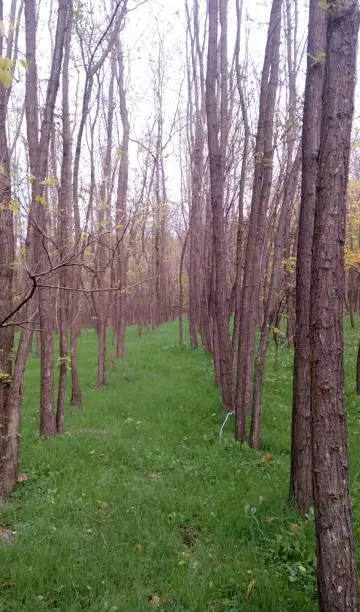
In a secluded forest known locally as the "Whispering Woods," located deep within the Pacific Northwest, a phenomenon previously confined to fantasy literature is now becoming a startling reality. Botanists and bio-acousticians have confirmed that the ancient trees of the forest are not only communicating with each other but are also emitting subtle, complex sound patterns that appear to be a form of language. The discovery was made by Dr. Anya Sharma, a researcher studying mycorrhizal networks, who noticed unusual electrical impulses and vibrational frequencies emanating from the root systems of old-growth trees. These impulses, when translated into audible frequencies, produced a series of clicks, hums, and low-frequency thrums that, upon further analysis, exhibited distinct patterns and repetitions. "It's not just a biological exchange of nutrients," Dr. Sharma explained, her voice filled with a mix of awe and disbelief, "it's a dialogue, a conversation happening right beneath our feet, and extending through the very air around us." The sounds are too faint for the human ear to detect unaided, but specialized sensors have captured hours of what appears to be a continuous, evolving arboreal discourse. The implications are profound, potentially redefining our understanding of plant intelligence and the intricate interconnectedness of ecosystems.
Further investigation into the Whispering Woods has revealed that the "language" of the trees is incredibly sophisticated. Different patterns of clicks and hums seem to correspond to various environmental conditions, such as changes in soil moisture, pest infestations, or even the approach of animals. Some sequences appear to be warnings, while others seem to convey information about nutrient availability or the presence of new saplings. The communication extends beyond individual trees; entire groves appear to be engaged in collective discussions, coordinating their responses to external stimuli. Dr. Sharma's team has also observed that certain fungi within the mycorrhizal network seem to act as intermediaries, amplifying and transmitting these signals across vast distances. The forest, once perceived as a collection of individual organisms, is now understood as a single, vast, interconnected intelligence. Local indigenous communities have long held beliefs about the "spirit of the forest" and the wisdom of ancient trees, often speaking of a "living consciousness" within the woods. Their oral traditions describe times when the trees "spoke" to their ancestors, guiding them and sharing knowledge. Could these ancient stories be more than just myth? The scientific community is grappling with the ethical implications of this discovery. If trees possess a form of intelligence and communication, how should humanity interact with forests? The Whispering Woods has become a living laboratory, challenging our anthropocentric view of the world and inviting us to listen more closely to the silent symphony of nature.
The latest findings from the Whispering Woods project are even more astonishing. Researchers have begun to identify distinct "voices" or "signatures" within the arboreal communication, suggesting that individual trees, or perhaps specific species, have unique patterns of expression. Moreover, certain complex sequences of sounds appear to be narratives, possibly recounting historical events within the forest, such as major fires, prolonged droughts, or the growth of new clearings. Dr. Sharma's team has even managed to identify what they believe are "songs" or "chants" – rhythmic patterns that seem to be expressions of well-being or distress. The forest is not just communicating data; it is sharing experiences. The implications for conservation are immense. Understanding the trees' language could allow us to better protect and manage forest ecosystems, responding to their needs in real-time. Environmental activists are calling for immediate protection of the Whispering Woods, arguing that it represents a unique form of non-human intelligence that deserves recognition and respect. The discovery has sparked a global movement to re-evaluate our relationship with the natural world, prompting questions about the sentience of all living things. The Whispering Woods stands as a profound testament to the hidden complexities of nature, urging humanity to listen, learn, and perhaps, one day, even converse with the ancient, wise voices of the trees.
Related Topics:
- Plant Intelligence
- Mycology
- Bio-acoustics
- Ecosystem Interconnectedness
The Revival of the Lost Art of Dream Weaving

In a quiet corner of the world, far from the clamor of modern technology, a forgotten practice known as "Dream Weaving" is experiencing an astonishing resurgence. This ancient art, once believed to be mere folklore, involves the conscious manipulation and creation of shared dreamscapes. The revival began with Elara Vance, a reclusive elder from a remote village nestled in the Himalayan foothills, who claims to have inherited the knowledge from a long line of ancestors. Through a combination of focused meditation, intricate symbolic patterns, and a unique form of communal chanting, Elara has demonstrated the ability to guide groups of individuals into a shared dream state, where they can interact with each other and with the dream environment she constructs. Witnesses describe vivid, hyper-realistic dream experiences, ranging from flying through fantastical landscapes to conversing with historical figures. The implications for therapy, education, and even entertainment are immense. Scientists, initially skeptical, are now flocking to the remote village, equipped with brainwave monitors and sleep study equipment, hoping to unravel the neurological basis of this extraordinary ability. Elara emphasizes that Dream Weaving is not about control, but about harmony and collective intent, a delicate dance between individual consciousness and a shared subconscious realm.
Preliminary scientific observations of Elara's Dream Weaving sessions have yielded perplexing results. Participants' brainwave patterns, particularly in the REM sleep phase, show unusual synchronization, far beyond what is typically observed in group sleep studies. Furthermore, individuals who have participated consistently report a significant reduction in stress, improved cognitive function, and a heightened sense of empathy and connection with others. Dr. Ben Carter, a neuroscientist from the Institute of Cognitive Studies, stated, "We are witnessing something that defies our current understanding of consciousness. The collective narrative and shared sensory experiences within these dreamscapes are undeniably real to the participants, and the physiological responses are measurable." Elara explains that the "weaving" involves creating a framework, a tapestry of symbols and intentions, into which the dreamers can then project their own subconscious elements. The shared dreamscape becomes a collaborative creation, a living, evolving world shaped by the collective imagination. The potential applications are vast: therapists could guide patients through shared dream scenarios to process trauma, educators could create immersive historical simulations, and artists could collaborate on unprecedented forms of interactive dream art. The revival of Dream Weaving challenges the very notion of individual consciousness, suggesting a deeper, interconnected layer of reality accessible through the power of collective human intent.
The global interest in Dream Weaving has exploded, with demand for Elara's guidance far outstripping her capacity. Universities are proposing dedicated research centers, and governments are cautiously exploring its potential for diplomatic and conflict resolution purposes, imagining a world where leaders could meet and understand each other on a deeper, subconscious level. Critics, however, raise concerns about the ethical implications and potential misuse of such a powerful ability. What if shared dreamscapes could be manipulated for propaganda or control? Elara herself is acutely aware of these dangers, emphasizing the importance of ethical guidelines, respect for individual autonomy within the dream, and the necessity of pure intentions. She teaches that the true power of Dream Weaving lies not in control, but in fostering understanding and connection. The ancient art, once a whispered secret, is now poised to revolutionize our understanding of the human mind, consciousness, and the very fabric of reality. The Whispering Woods, where trees speak, and the shared dreams of humanity are woven, hint at a universe far more mysterious and interconnected than we ever dared to imagine. As the world grapples with these profound discoveries, the lines between science and spirituality, reality and dream, continue to blur, inviting humanity to embrace a new era of understanding.
Related Topics:
- Consciousness Studies
- Lucid Dreaming
- Ancient Practices
- Neuroscience